One Hob, No Garden: Bringing Ocakbaşı Heat to a Flat-Sized Kitchen
A Turkish grill done properly is a big-hearted thing: an open fire, a table crowded with little plates, someone tearing bread and arguing about who gets the last bit of the crisp edge. None of which sounds much like a one-bedroom flat in Leeds on a wet Tuesday in November 2026, with the extractor fan making its usual apologetic noise and the smoke alarm watching you like a suspicious neighbour.
But here's the thing. You don't need a garden, a charcoal chimney or a landlord with a relaxed attitude to flame to eat that way at home. You need the right cuts, a properly hot pan, a window that opens and a menu that's been trimmed to fit the kitchen you've actually got. Everything else is theatre — and a fair amount of the theatre is exactly what sets the alarm off.
So this is the small-kitchen version. Two people, an electric hob or the oven grill, and a night that still tastes like it came off a fire.
Pick cuts that behave themselves indoors
Ocakbaşı cooking is generous with fat and patient with heat. A domestic hob has less of both, so the first job is choosing meat that doesn't demand a raging mangal to taste good.
- Lamb neck fillet. The home cook's best friend. Well marbled, forgiving, and it stays juicy even when you've slightly overcooked it because you were opening a window.
- Boneless chicken thighs. Never breast. Thighs cope with moderate heat and stay tender; breast goes dry and sulky within seconds.
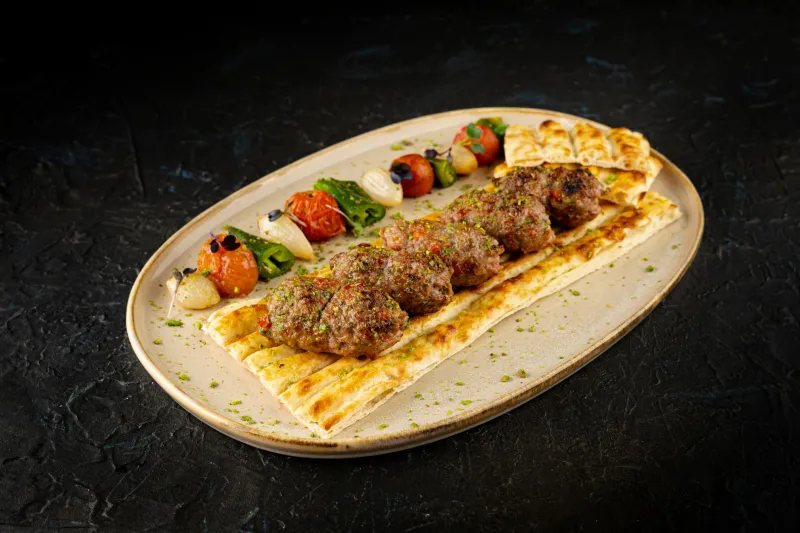
- Lamb mince kofta. Go for about 20 per cent fat. Grate an onion, squeeze the water out in a tea towel, knead it through with parsley, pul biber and salt, then chill before shaping.
- Wings and drumsticks. Cheap, hard to ruin, and they crisp beautifully under a grill.
- The non-meat half: halloumi, long green çarliston-style peppers, thick onion wedges, tomato halves, aubergine sliced into fat fingers.
What to leave for the restaurant: lean steak, chicken breast, and anything sitting in a honey or sugar-heavy marinade, which will blacken long before it's cooked through.
The marinade that won't punish you later
For chicken and lamb neck, a yogurt base is the sensible choice. Full-fat yogurt, a good glug of olive oil, pul biber, dried oregano, crushed garlic, salt and black pepper. A pinch of isot pepper if you've got a Turkish grocer nearby; if not, smoked paprika is a decent stand-in. Two hours is the minimum for chicken, overnight is better, and half an hour will do for neck fillet.
The bit people skip: pat the meat dry before it hits the pan. Wet marinade steams first and burns second, and burning is what fills your kitchen with the kind of haze that has you flapping a tea towel at the ceiling. Oil the meat lightly, not the pan. For kofta, skip the yogurt entirely — onion, parsley, spice, salt, a good knead, then rest in the fridge so they hold together on the skewer.
Let's talk about the smoke
There's no point pretending otherwise: grilling indoors produces smoke. The trick is producing less of it, and getting rid of what's left.
- Extractor on ten minutes early, not when you smell burning.
- A window open a crack, even in November. Wear a jumper. This is the price.
- Preheat the griddle pan properly — a full five minutes over a medium-high heat. Meat that hits a genuinely hot surface sears and releases; meat that hits a lukewarm one sticks, tears and stews.
- Cook in batches. Crowding the pan drops the temperature and creates steam, and steam is smoke's slow, smug cousin.
- Foil-line the tray if you're using the oven grill. It catches the fat and halves the washing up.
- Dry the surface of the meat with kitchen paper right before cooking.
And if you have a balcony, a fire escape you're allowed to use, or a window ledge wide enough for a griddle pan, do the smokiest round out there and bring it back in on a warm plate. Nobody has ever regretted this.
A compact menu for two
The aim is a table that looks like a feast and a sink that doesn't look like a crime scene. Cook one thing, assemble the rest.
Make-ahead cold mezze (no cooking at all)
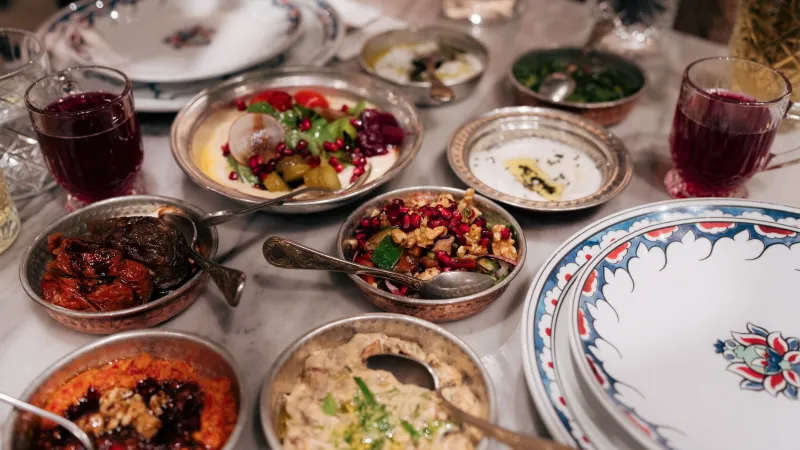
- Haydari: thick yogurt, crushed garlic, salt, dried mint, a slick of olive oil.
- Ezme: tomato, green pepper and onion chopped very fine, with parsley, pomegranate molasses and pul biber. Sharper and wetter than a salsa, and better for it.
- A bowl of good olives, and a jar of muhammara if you're buying rather than making.
Warm things, done alongside
- Flatbreads — shop-bought pide or bazlama from a bakery, warmed in a dry frying pan and brushed with butter, pul biber and sesame seeds.
- Bulgur pilaf made on the hob in ten minutes while the grill does its work: bulgur, stock, a little tomato paste, butter, salt, lid on, off the heat.
- Sumac onions: red onion sliced thin, rubbed with sumac, salt and lemon. This is the plate that makes everything else taste brighter.
From the pan
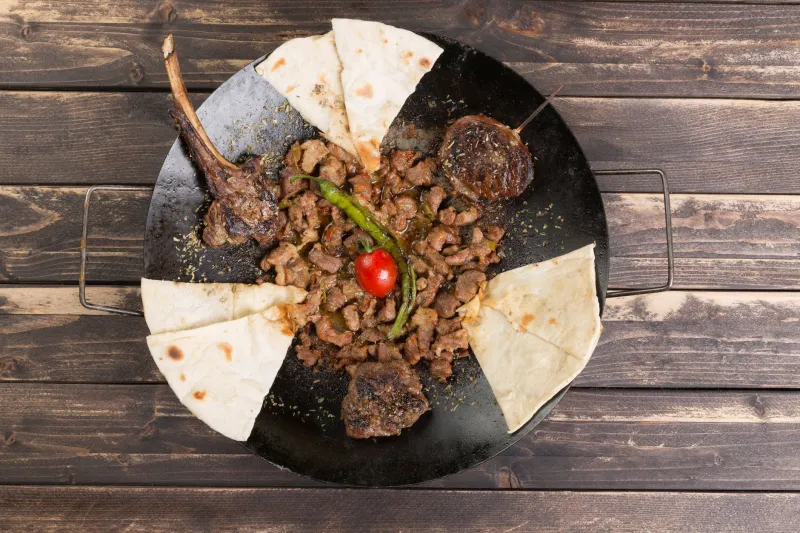
Lamb neck skewers and chicken thigh skewers, or kofta if you'd rather not faff with wooden sticks. Peppers and onion wedges go in for the last few minutes. Lemon halves, cut side down, for thirty seconds at the end.
A rough timeline
- The night before, or that morning: marinate the meat.
- 45 minutes out: make haydari, ezme and sumac onions; take the meat out of the fridge to lose its chill.
- 20 minutes out: bulgur on, oven on low with plates and bread inside.
- 10 minutes out: pan on, extractor on, window open.
- Cook in two rounds, rest the meat five minutes. Resting is not optional; it's the difference between juicy and merely cooked.
Keep the washing up small
One griddle, one small saucepan, one board, two mixing bowls, foil in the tray. Serve from the board and let people help themselves — the whole point of a Turkish table is that it's a spread, not a plated dinner. Put the mezze out first, let people start, and bring the grilled plates in stages rather than all at once. It's calmer for the cook and better for the appetite.
And afterwards
You will get a bit of smoke. There'll be a faint smell of grilled fat in the hallway on Wednesday morning, and honestly, that's the point — it's the same smell that greets you walking into a good ocakbaşı, just at a smaller volume. Open the window, put the kettle on, and finish with something sweet and cold from the fridge.
And if the whole operation sounds like more effort than a Tuesday deserves — well, that's what we're here for. Some nights the right answer is a table by the fire that somebody else is tending.