Warm Salads, Cold Nights: The Turkish Grill Plates That Keep Winter Generous
Winter menus have a habit of going straight for the big guns: rich stews, melted cheese, deep-fried everything. Lovely, in their place. But after a few weeks of it, you can start craving something with a bit of edge — something warm, yes, but not heavy. That’s where the warm salad table comes in.
At a Turkish grill, this isn’t a sad side dish placed at the edge of the plate. It’s a proper strand of the meal: charred greens, roasted squash, bulgur, grilled aubergine, sharp dressings and little bursts of pomegranate. They sit alongside kebabs and flatbread without competing. They make the whole spread feel lighter and, somehow, more generous at the same time.
Why winter needs a warm salad table
Cold-weather eating often falls into a false choice. You can have something comforting, or something fresh — but not both. A Turkish grill politely ignores that rule. The cooking is already built on contrast: smoke from the ocakbaşı, cool yoghurt, sharp sumac, soft bread, crisp salad. Warm vegetable plates simply extend that logic.
They also suit the way we actually eat in November and December. When it’s dark by half four and the table is full of people reaching across each other, a bowl of something warm and spoonable earns its place. It doesn’t need to be the star. It just needs to do its job: wake up the palate, add colour, and give the meal a bit of breathing room.
And for anyone trying to eat a little more lightly without turning supper into a punishment, these plates are quietly useful. They’re built on vegetables, grains and pulses, but they’re rarely ascetic. Olive oil, char, molasses and herbs see to that.
The plates that do the heavy lifting
A good warm salad table at a Turkish grill is less about leaves and more about cooked vegetables with attitude. Charred greens — hispi cabbage, spring greens, tenderstem broccoli — are a natural fit. Blistered over heat and dressed with lemon or a little pomegranate molasses, they keep their bite and pick up a smoky edge that works beautifully with lamb or chicken.
Roasted squash is another winter regular. Cubed, oiled and roasted until the edges caramelise, it brings sweetness without becoming sugary. Pair it with bulgur, herbs and a tangy dressing and you’ve got something that eats like a proper dish rather than a garnish.
Grilled aubergine deserves a mention too. Soft inside, smoky outside, it soaks up dressings like a sponge. Add yoghurt, garlic and a little chilli and you have one of the most useful plates on the table — good with bread, good with meat, good on its own.
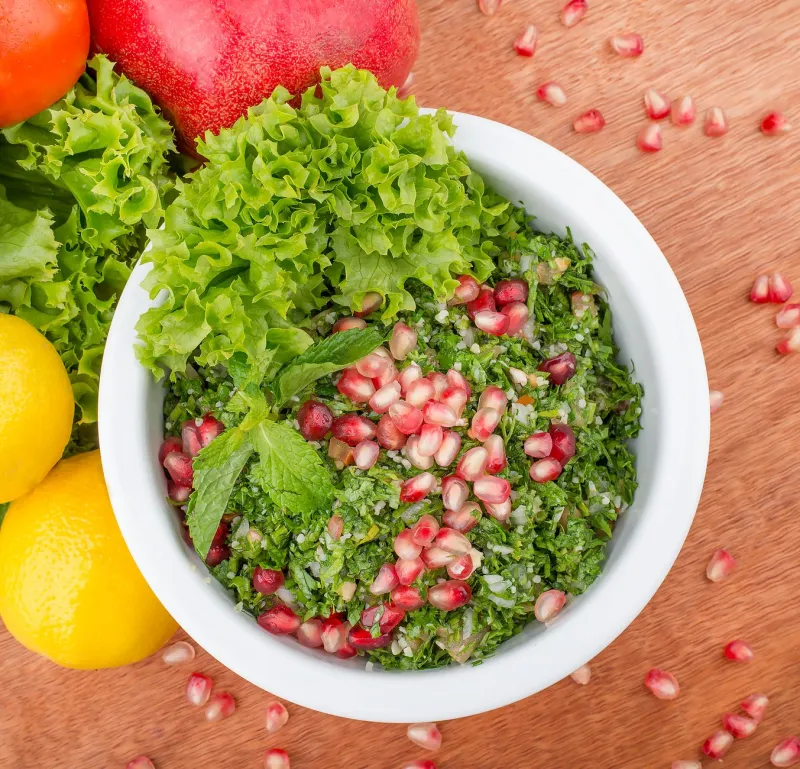
Then there’s bulgur. It’s the quiet workhorse of many Turkish tables: nutty, chewy, quick to prepare and very good at carrying flavour. Mixed with parsley, mint, tomato, lemon and olive oil, it becomes a warm salad that fills in the gaps between grilled things.
How to order one at a Turkish grill
If you’re building a shared spread, think of warm salads as punctuation rather than the whole sentence. One or two well-chosen vegetable plates per two or three kebab or grill dishes is usually about right. They stop the table from becoming a wall of meat and bread.
Ask what’s been charred that day. Grilled vegetable plates are often at their best when they’re simple and recently cooked, not sitting around under a lamp. If you’re ordering for a mixed table, include something sharp — a lemony dressing, a pomegranate molasses number, a garlicky yoghurt — and something soft, like roasted squash or aubergine. The contrast is the point.
Don’t ignore the flatbread. A warm salad with a bit of dressing is excellent when scooped up with bread, and it helps the whole table feel more relaxed. And if you’re feeding children or cautious eaters, keep one plate plain: charred greens with olive oil and lemon, say, rather than a full-on molasses dressing. Everyone can add what they like.
A simple home version
You don’t need a restaurant grill to get the idea. A hot oven and a heavy frying pan will do most of the work. This is a rough recipe rather than a strict one — the kind of thing you can adapt to whatever is in the veg drawer.
Charred greens and squash with bulgur and pomegranate dressing
Serves 4 as a side, or 2 as a light supper with bread and yoghurt
- 1 small squash or ½ large one, peeled and cut into 2cm chunks
- 2 tbsp olive oil, plus extra for dressing
- 150g bulgur wheat
- 300ml hot vegetable stock
- 200g tenderstem broccoli or spring greens, roughly chopped
- 1 tbsp pomegranate molasses
- Juice of ½ lemon
- 1 small garlic clove, crushed
- A handful of parsley, chopped
- Seeds from ½ pomegranate (optional)
- Salt and black pepper
Heat the oven to 220°C/200°C fan/gas 7. Toss the squash with a little olive oil and salt, spread it on a baking tray and roast for 20–25 minutes, until tender and browned at the edges.
Meanwhile, put the bulgur in a heatproof bowl, pour over the hot stock, cover and leave for 10–15 minutes until absorbed and tender. Fluff with a fork.
Heat a heavy frying pan until it’s properly hot. Add the greens with a tiny splash of oil and cook for 3–4 minutes, turning once, until charred in places and just tender. Don’t crowd the pan — do it in batches if needed.
Whisk the pomegranate molasses, lemon juice, garlic and 2 tbsp olive oil with a pinch of salt. Taste it: it should be sharp, slightly sweet and a little punchy.
Fold the warm squash and greens through the bulgur, then spoon over the dressing. Scatter with parsley and pomegranate seeds if you have them. Serve warm, with flatbread and a bowl of yoghurt on the side.
The generous bit
A warm salad table isn’t about replacing the grill. It’s about giving it room to breathe. The kebabs still matter. The bread still gets torn and shared. But a few charred, tangy, grain-filled plates make the whole meal feel more balanced — and, crucially, more interesting to eat.
In the depths of winter, that’s worth a lot. It’s comfort food, but with a bit of spark. And it’s the kind of thing that keeps a shared table talking long after the last piece of flatbread has gone.