The Heat Is Optional: Building a Turkish Grill Order for Every Tolerance
Photo: Turkish mezze table with grilled kebabs, yoghurt, bread and red pepper flakes, overhead warm restaurant scene, via openjaw.com
A Turkish grill can look like a dare. There are dark-red flakes on the table, a fiery-looking ezme in the middle, a kebab with a reputation and a bottle of chilli sauce lurking near the salt. For anyone who likes big flavour but not a burning mouth, that can feel like a warning. It does not have to be.
The trick is to stop treating heat as a single setting. Turkish food does not do bland-or-blazing. It does layers: smoky, fruity, sharp, rich, fresh and, yes, sometimes properly hot. Once you know where the fire actually lives, you can order a table that pleases the chilli-lovers and the cautious without anyone feeling like they are missing out.
First, separate flavour from fire
A lot of what looks hot on a Turkish table is really about aroma. Pul biber, the red flake you often find in a little bowl, is a good example. It can bring a gentle warmth, a bit of fruitiness and a lovely red gloss to grilled meat, but it is not always a tongue-scorcher. Isot, the dark, almost burgundy pepper from south-eastern Turkey, is more about smoke and depth than raw heat. Sprinkle either over a kebab or a spoonful of yoghurt and you get character first, burn second.
The genuinely hot stuff tends to be more obvious once you know the signs. Acılı ezme, the chopped tomato and chilli relish, can be bright and fresh with a real kick, but recipes vary wildly. Spicy Adana kebab is another one: some kitchens make it gently warming, others make it bold. Chilli sauces and biber salçası, the red pepper paste, can be concentrated and punchy. Grilled peppers can also surprise you, especially if you bite into the seeds.
The quick heat map on a Turkish menu
- Pul biber: usually mild to medium, fruity and a little smoky. Treat it as a seasoning, not a test.
- Isot: dark, earthy and smoky with low-to-medium heat. Excellent with lamb and yoghurt.
- Acılı ezme: fresh, sharp and variable. Ask before assuming it is mild.
- Spicy Adana: minced lamb with chilli. It can be gentle or fierce depending on the kitchen. Ask, or choose a mild kofta if you want the same grilled texture without the gamble.
- Chilli sauce: often the hottest thing on the table. Order it on the side and add it drop by drop.
- Grilled peppers: not always hot, but the seeds can catch you out. Remove them if you are unsure.
Order for the table, not for the bravest person at it
A good Turkish grill order is a balancing act. If every dish brings heat, the meal becomes a endurance test. If nothing does, it can feel flat. The sweet spot is one or two spicy dishes shared in the middle, with plenty of mild, cooling and savoury plates around them.
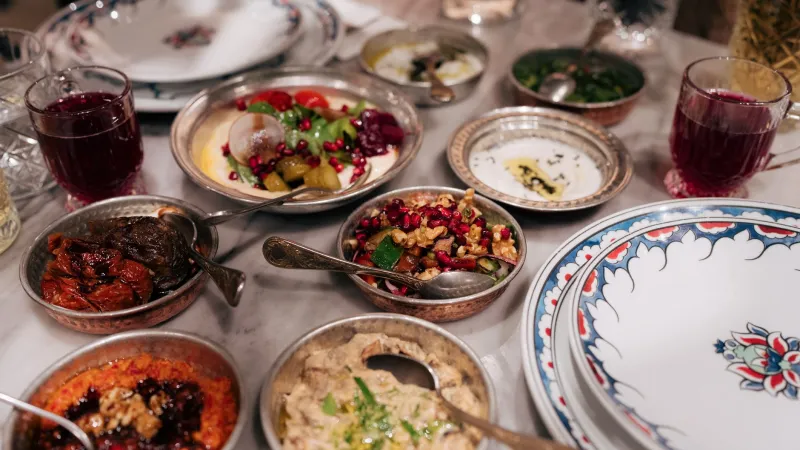
Start with mezze that calm rather than challenge. Hummus, haydari, cacık and baba ganoush are all generous, creamy and soothing. A simple tomato and onion salad, dressed sharply, gives freshness without fireworks. Flatbread is not just a side; it is part of the strategy. Use it to scoop, soften and spread the heat around.
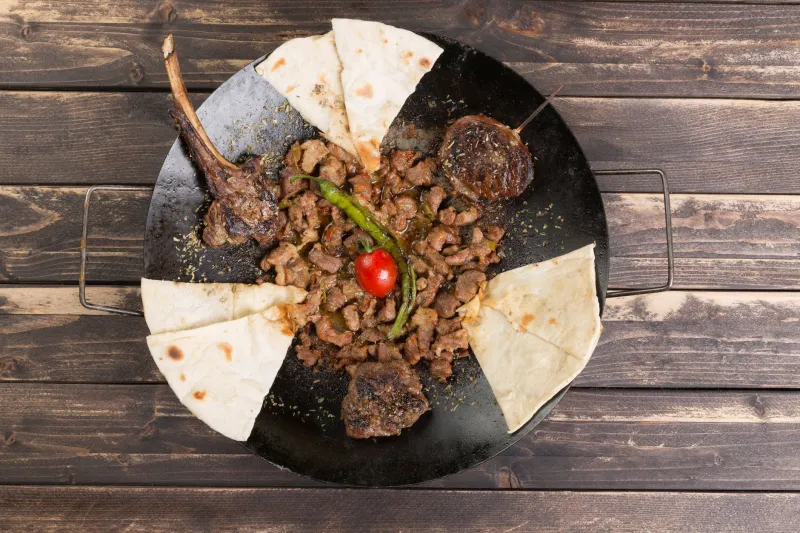
For the grill, anchor the table with mild cuts: chicken shish, lamb shish, kofta, halloumi, maybe some wings if they are not heavily spiced. Then add one spicy Adana or a dish of acılı ezme as the shared thrill. That way, anyone who wants fire can go back for more, and anyone who does not can simply enjoy the rest.
Cooling is a proper part of the order
Yoghurt is the quiet hero of a Turkish table. Cacık, with its cool yoghurt, cucumber and mint, is almost designed for a mouthful of something hot. Haydari does a similar job with a little more tang. Ayran, the salted yoghurt drink, is another sensible order. It is refreshing, lightly salty and far better with grilled meat than a sugary fizzy drink.
Bread, bulgur, rice and spoonfuls of hummus all help to soften the edge of a spicy dish. Water matters too. If someone at the table is sensitive to heat, do not leave them relying on a single glass. Order a jug, keep the ayran coming and put the chilli sauce at the far end of the table rather than beside their plate.
How to ask without making it a thing
You do not need to interrogate the waiter. A few simple questions do the job. Is the Adana spicy or just well seasoned? Can the chilli sauce come on the side? Which mezze are on the mild side? Are there seeds in the grilled peppers? In most Turkish grills, these are normal questions, not fussy ones. The kitchen knows that heat tolerance is personal.
If you are ordering for a group, say so plainly. A mixed grill for sharing is a lovely thing, but ask whether the spicy pieces can be kept to one side or swapped for something milder. Most places would rather adjust than watch a guest push food around the plate.
A balanced table to copy
For four people, try this: hummus, haydari and cacık to start; one acılı ezme for the heat-seekers; chicken shish, lamb shish and one spicy Adana to share; flatbread and bulgur on the side; extra chilli sauce in a small dish; ayran and water for the table. It is not a compromise. It is a proper spread, with something smoky, something fresh, something creamy and something with a kick.
The point of a Turkish grill is generosity, not showing off. Heat should be one of the pleasures on the table, not a hurdle you have to clear before dinner starts. Order with a little thought, keep the cooling plates close and let everyone choose their own level of fire.
At Topkapi Grill, the best table is the one where the chilli-lover and the chilli-dodger both reach for another piece of bread. That is not a watered-down feast. It is just a well-built one.