A Sunday Table Without a Carving Knife: The Case for Turkish Brunch
Photo: E4024, CC BY-SA 4.0, via Wikimedia Commons
Sunday lunch in Britain has a script. There is a joint, there are potatoes, there is gravy, and there is a collective sigh before the nap. It is a good script. It is also a rigid one. A Turkish mangal brunch — brunch because it drifts from late morning into early afternoon — is the more sociable way to feed a family on a Sunday. It does not ask everyone to be hungry at the same moment, or to like the same things. It asks only that they turn up, take a plate and reach.
A mangal is a charcoal grill, but the word also carries the occasion: lit coals, folded bread, little bowls, people standing around. At home, a griddle pan or the oven grill will do the same job. The point is not to recreate a full Turkish breakfast or a restaurant meze spread. It is to build a relaxed weekend table around grilled things, eggs, bread and a few cold plates — and to let the table stay there while people come and go.
The roast has one timetable. A mangal brunch has several.
A roast is a performance with a cue. The meat must rest, the potatoes must crisp, the gravy must come together, and everyone needs to be seated at the same time. If one person is late, the whole thing tightens. A Turkish brunch table is more forgiving. The mezeler can sit. The bread can be warmed in batches. The grill can run in waves. The eggs are the only thing that really wants last-minute attention, and even then, menemen is forgiving if someone is still upstairs.
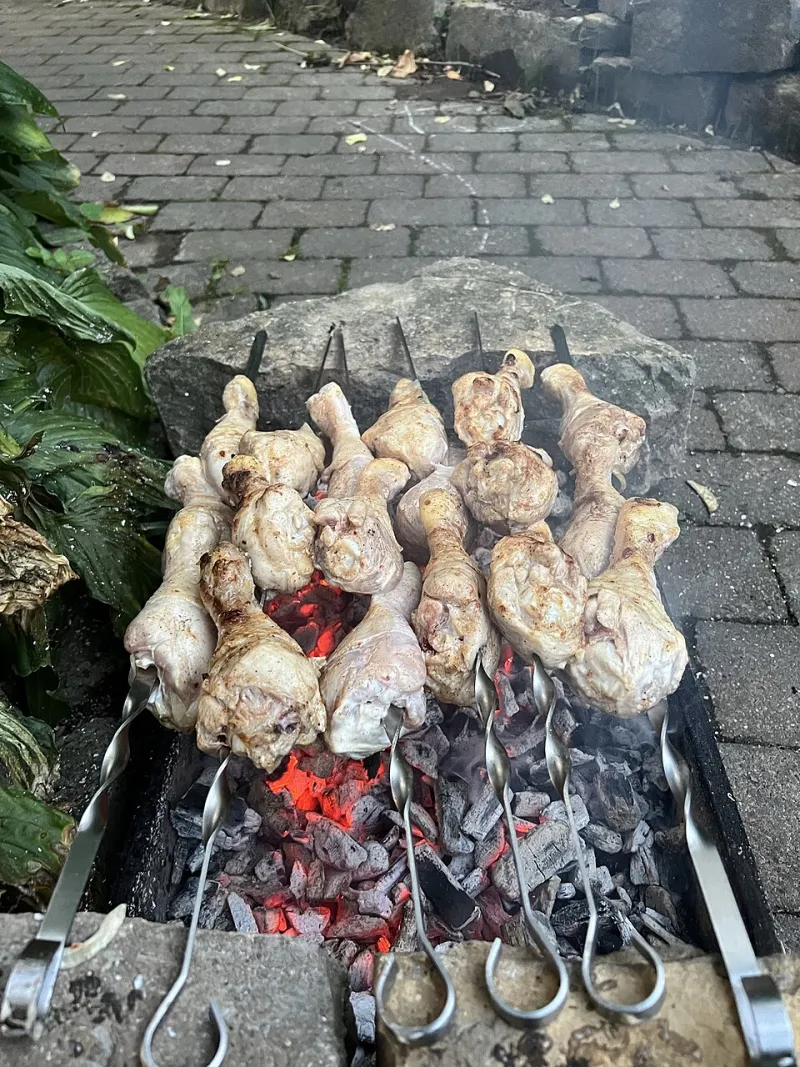
This is why it works for mixed ages. A child can build a plate from bread, halloumi and a little sucuk. An adult can add menemen, ezme, olives and as much pul biber as they dare. A vegetarian can eat well from the mezeler, halloumi and bread. Someone with a bigger appetite can have a second wave of kofta or chicken wings. Nobody has to negotiate a plate that was assembled for them in the kitchen.
The core of the table
Sucuk and eggs are the heart of it. Sucuk is a Turkish beef sausage, garlicky and spiced, and it is at its best sliced into coins and fried until the edges crisp. Crack eggs into the pan, let them set gently, and take the pan to the table with bread for scooping. Do not overcook them; the point is softness against the crisp sausage.
Menemen is the other anchor: a soft scramble of tomatoes, green peppers and eggs, lifted with pul biber. It should be spoonable, not a dry omelette. Grill halloumi until it is scored and squeaky, then finish with lemon and dried oregano. Warm bread — flatbread, pide, simit if you can find it — is not a side. It is the implement, the mop and the thing that makes the table feel generous.
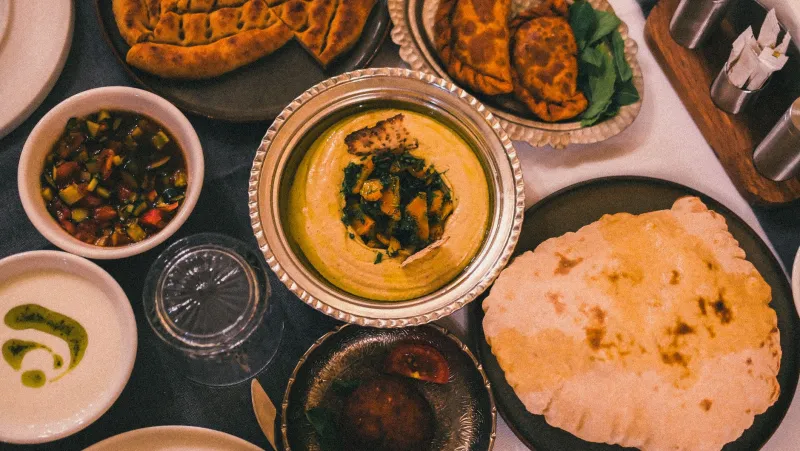
Then build a few cold plates: cucumber and tomato with lemon and salt; garlic yoghurt; ezme; a bowl of olives; maybe beyaz peynir, the salty white cheese that sits so well beside eggs. Hummus is not strictly necessary, but a bowl of it keeps children happy. None of this needs to be fancy. A plate of sliced cucumber with salt and lemon is a meze if you put it on the table with intent.
Make-ahead Sunday
The trick is to do the cold work on Saturday and leave Sunday for warming and eggs. Make the ezme a day ahead; it improves. Beat the garlic into the yoghurt and keep it covered in the fridge. Wash the herbs, slice the cucumber, set the table, and mix any kofta mixture so it can sit. On Sunday, warm the bread, fry the sucuk, grill the halloumi and make the menemen at the last minute. Keep the halloumi warm in a low oven if you are cooking in batches, and keep the bread wrapped in a tea towel so it does not go leathery.
Put the cold mezeler out twenty minutes before you want to eat. They taste better when they are not fridge-cold, and it gives people something to pick at while the eggs are finished. Put everything in small bowls rather than one big one; the table looks fuller, and people take what they want. Do not plate up. A Sunday table should look like it is waiting for people, not like it has already been portioned.
A menu for mixed appetites
For younger children: bread, halloumi, cucumber, yoghurt and a little sucuk on the side. For adults: menemen, ezme, olives, extra pul biber and a pot of Turkish tea. For vegetarians: halloumi, mezeler, bread and eggs if they eat them. For bigger appetites: add chicken wings or small lamb kofta, grilled in the same wave as the halloumi. For late arrivals: keep the bread coming and make a fresh pan of eggs. Nobody needs to miss out because they slept in.
The British roast is a lovely thing, and nobody is suggesting it should disappear. But for a family table with different appetites, different schedules and a shared dislike of being told when to sit down, a Turkish mangal brunch is simply more useful. It is also more sociable. There is no carving knife, no one trapped in the kitchen, no moment when the gravy has to be perfect. There is just bread, eggs, grilled cheese, a few sharp salads and the slow business of Sunday.
At Topkapi Grill, the same instinct shapes the sharing tables: plenty of small things, a hot grill, and no rush. A Sunday mangal is not a compromise between breakfast and lunch. It is the better version of both.