The Meat-Free Mezze Table: Eating Properly as a Vegetarian at a Turkish Grill
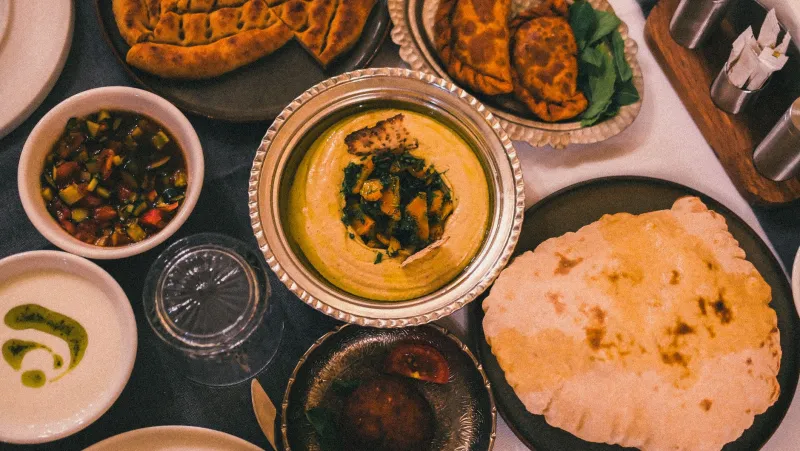
Photo: Turkish vegetarian mezze spread grilled halloumi aubergine pide bread, via i.pinimg.com
There's a tired assumption that a grill restaurant is the worst possible place to take a vegetarian. All that charcoal, all those skewers, all those menus with a lone mushroom risotto lurking at the bottom as an apology.
Turkish food doesn't really work that way. Long before grilling meat became the headline act, this was a cuisine built on vegetables, pulses, yoghurt, bread and olive oil — and a great deal of it never goes anywhere near an animal. Walk into a good ocakbaşı in November and the vegetarian at the table is arguably eating the most interesting food in the room.
Here's how to order it without anyone feeling like an afterthought.
Start with the mezze, because it's already on your side
The cold counter is where a meat-free feast begins, and most of it is vegetarian by default rather than by substitution.
- Hummus — chickpeas, tahini, lemon, olive oil. Nothing to negotiate.
- Muhammara — red pepper and walnut, sweet-sour and slightly smoky, excellent with bread.
- Patlıcan salatası — charred aubergine mashed with yoghurt, garlic and lemon. Smoke is the whole point.
- Haydari — thick yoghurt with garlic and herbs, the cooling counterweight to anything spicy.
- Ezme — finely chopped tomato, pepper, onion and chilli. Sharp, fresh, dangerously easy to keep eating.
- Kısır — bulgur salad with tomato paste, herbs and pomegranate. Filling in a way salad rarely is.
- Piyaz — white beans with onion and parsley. Quietly one of the best things on any Turkish table.
- Yaprak sarma — stuffed vine leaves. Usually meat-free, but ask, because some kitchens include mince.
Order four or five of these for a table of three or four and you've already got a meal. The bread is the delivery system and it will keep coming.
The charcoal does vegetables beautifully
This is the part people forget. The ocakbaşı exists to put food over fire, and fire is very good to vegetables.
Whole aubergines are charred until the skin blackens and the insides collapse, then dressed with olive oil, garlic and parsley. Peppers and tomatoes go on the grill alongside the skewers and arrive blistered and sweet. Onions get softened over the coals until the edges catch. Flat mushrooms take on that unmistakable smoky edge that no oven can fake.
Grilled halloumi — hellim — is a staple of Turkish Cypriot cooking and turns up on most UK grill menus. Ask for it as a plate with grilled vegetables and it's a proper main course, not a garnish. The same goes for grilled peppers stuffed with rice and herbs (biber dolma), which are filling, slightly sweet and very good cold the next day.
One useful word: közlenmiş. It means roasted or charred over embers, and if you see it in front of a vegetable on a menu, that's your order.
Pide straight from the oven
A good Turkish grill has a stone oven running alongside the charcoal, and the pide coming out of it is where vegetarians quietly win.
Cheese pide (kaşarlı) is the simple classic — stretched dough, melted cheese, butter, done. Spinach and cheese pide is the more virtuous-sounding one that tastes just as good. Some kitchens will do a mixed vegetable pide with peppers, onion and tomato if you ask nicely, and most will happily leave the meat off a topping if you request it at the point of ordering rather than after it arrives.
Do watch out for lahmacun, which looks like a vegetarian-friendly flatbread and is not — it's topped with minced lamb. It's delicious, but it isn't yours.
The things that catch people out
A little vigilance goes a long way, and none of this requires a difficult conversation.
- Soup. Red lentil (mercimek) is usually meat-free, but some kitchens use chicken stock. Ask.
- Rice and bulgur pilaf. Often cooked in stock. Ask for plain if you're unsure.
- Shared fryers and grills. If cross-contamination matters to you, say so — kitchens are generally happy to use a clean area of the grill.
- The Iskender treatment. Butter, yoghurt and tomato sauce get poured over things at the table. If someone at your table orders one, keep your own plate clear at the edge.
- Stuffed vegetables. Dolma can mean rice-stuffed or meat-stuffed. Point at what you want and confirm.
How to say it so it lands first time
You don't need much Turkish, but a couple of phrases go a surprisingly long way. 'Etsiz' means without meat. 'Et yemiyorum' means 'I don't eat meat'. Said with a smile while pointing at the mezze you fancy, it's clearer than a paragraph of explanation and waiters hear it every day.
The other phrase worth knowing is 'karışık sebze' — a mixed vegetable plate. Many grills will put one together off-menu: grilled halloumi, charred aubergine, peppers, mushroom and a skewer of vegetables, served with bulgur and salad. Ask if they can do it. Most can.
A sample meat-free order for four
Five cold mezze to start, plus a bowl of olives and plenty of bread. Two hot plates of halloumi, one aubergine dish, one plate of stuffed peppers. A cheese pide and a spinach pide to share. One big mixed salad. Finish with künefe between you, which is shredded pastry, melted cheese and syrup, and is entirely vegetarian.
That's a full, generous, passing-plates-around-the-table dinner that happens to contain no meat at all. Nobody at the table will feel they're eating a compromise, and nobody will be reaching for a takeaway afterwards.
That's the thing worth saying plainly: in Turkish cooking, vegetables aren't the fallback option. They're half the repertoire, cooked with the same care and the same fire as everything else. All you have to do is order them.